
How to Connect Coaxial Cable to Wifi Router: Explained
A coax cable usually connects to a cable modem or gateway, not a standard Wi-Fi router. Learn the difference and check the connection in November 2026.
 By Leila Lindqvist
Updated November 19, 2026

A coaxial cable from a wall outlet usually connects to a cable modem or a modem-router gateway, rather than to a standalone Wi-Fi router. For how to connect coaxial cable to wifi router, first identify which device you have and what its ports are designed to do. A coax connector and a Wi-Fi antenna connector can look related, but they serve different purposes and aren’t interchangeable. Connecting the cable to the wrong port won’t provide the intended internet connection.
If your equipment is a cable modem-router combo, the coax line can connect to its coax input, subject to the device and internet provider requirements. If you have a separate modem and router, the coax line generally connects to the modem, while an Ethernet cable links the modem to the router’s internet or WAN port. A router with antenna connectors may accept a matching antenna cable, but that connection doesn’t replace the modem’s service connection. Checking the equipment labels and connection types is the useful first step before attaching cables or changing settings.
| Award | Product | Mesh WiFi Routers Score About Mesh WiFi Routers ScoreMesh WiFi Routers Score is a comparison aid based on available product information, not a hands-on testing result. Read our review methods. | |
|---|---|---|---|
|
XRDS - RF 50ft RP-SMA Male to RP-SMA Female Coax
|
8.6/10 | Buy | |
| Best Overall |
 NETGEAR Nighthawk DOCSIS 3.1 Modem Router Combo |
9.2/10 | Buy |
| Best Budget |
 Bingfu RP-SMA Male to RP-SMA Female Bulkhead Mount |
9.1/10 | Buy |
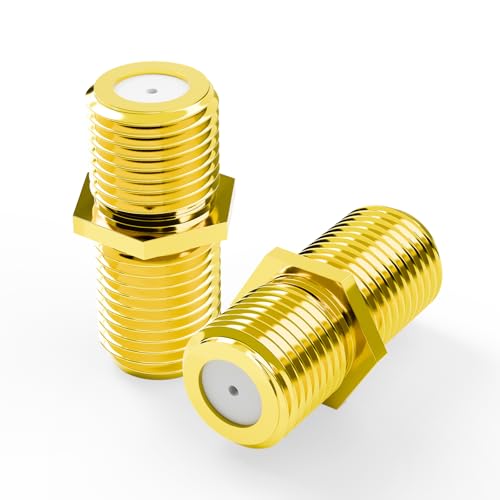 VCE RG6 Coax Cable Connector F-Type Female |
8.8/10 | Buy | |
 RG6 Coax Quick Connector Quick Push On Male to F |
8.1/10 | Buy | |
| Best Value |
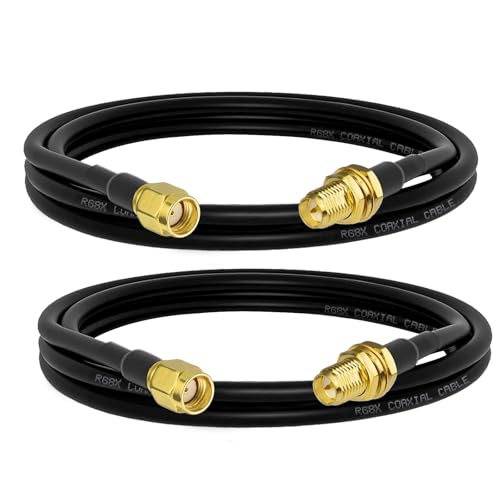 RP-SMA Male to RP-SMA Female Cable 3ft |
8.6/10 | Buy |
| Best Premium |
 MOOKEERF RG58 Coaxial Cable 150ft |
8.3/10 | Buy |
Connect the coax line to the right network device
To get home internet through a coax wall outlet, connect that service line to a cable modem or a compatible modem-router gateway. A standalone Wi-Fi router doesn’t become a cable modem just because a coax cable or adapter can be attached to it. First determine whether the coax port is intended for the provider’s cable signal or whether a small coax connector serves an external Wi-Fi antenna. Those connections have different functions, connector types, and requirements.
Use the device labels and its manufacturer instructions to identify the ports before setup. The coax connection for cable internet is typically labeled for cable input, while a router’s antenna connectors are commonly labeled for antennas or wireless bands. Don’t rely on appearance alone: connector size and thread patterns can be confusing, and a forced or mismatched connection can damage equipment. If the port purpose isn’t clear, check the exact model documentation or ask the provider before proceeding.
These checks help distinguish the service connection from a wireless antenna connection.
- Look for a coax input identified for cable service on a modem or gateway.
- Check whether the router is standalone or combines a modem and router.
- Identify antenna ports by their labels and the equipment manufacturer’s documentation.
- Match connector types instead of assuming all coax cables fit all ports.
- Confirm that the modem or gateway is supported by the internet provider.
Identify a modem-router gateway versus a standalone router
A modem-router gateway combines the functions of a modem and a router in one enclosure. If it supports the provider’s cable service and has a designated coax input, the service cable connects there as described in its instructions. The same device then manages the local network and wireless access, although service activation or configuration may still be required. Confirm provider and plan compatibility rather than assuming that every gateway can be used with every cable service.
A standalone router creates a local network but usually relies on a separate modem or other internet handoff to reach the provider. In a cable setup, the coax line goes to the modem, and an Ethernet connection carries the modem’s network connection to the router’s WAN or internet port. The router’s Ethernet ports for local wired devices serve a different role. Follow port labels and the instructions for both devices, since a particular device may use different names or setup steps.
Some homes receive internet through a service type other than cable, or use provider-supplied equipment with a different arrangement. A coax outlet in a room doesn’t by itself establish that it is active, connected to the provider’s service, or suitable for the router you own. Check which equipment the provider requires and whether any existing modem must remain in the setup. If service includes bundled features, verify that the proposed equipment supports those requirements before disconnecting existing equipment.
Match the coax cable and connector to the intended port
Coax cables are made for different applications, and connector compatibility matters as much as the word coaxial. Cable internet equipment commonly uses a threaded F-type connection for its service input, while Wi-Fi antenna extensions may use SMA or RP-SMA connectors. The similar names can be easy to mix up, but SMA and RP-SMA differ in the center contact arrangement. A cable intended for an antenna extension shouldn’t be treated as a cable-service lead unless the device documentation specifically calls for it.
Impedance is another distinction in the supplied cable descriptions: RG6 service cables and RG174, RG58, or RG8X antenna cables aren’t automatically interchangeable. A connector that screws on or pushes into place isn’t proof that the cable is appropriate for the signal or device. Check the equipment documentation for its required connector and cable type, and check the cable labeling when available. Avoid adding adapters simply to make a physical connection if the equipment instructions don’t support that arrangement.
Use these practical checks before connecting either type of coax line.
- Read the labels beside each port and consult the device’s model-specific instructions.
- Confirm whether the connection is for cable service or an external Wi-Fi antenna.
- Check the connector family, including F-type, SMA, and RP-SMA distinctions.
- Use a cable type and impedance specified for the intended equipment.
- Don’t force, modify, or substitute a connector to overcome an apparent mismatch.
- Ask the provider or equipment manufacturer when the port’s purpose remains uncertain.
Connect cable internet through a modem or compatible gateway
For a compatible cable modem or gateway, locate the coax input designated for the provider’s line and connect the service cable as directed by the manufacturer. Make sure the cable reaches the intended port without being sharply bent, pinched, or pulled taut. Secure a threaded connector according to the equipment instructions, without forcing it or overtightening it. Then connect the other required cables, such as power and, for a separate router, Ethernet between the modem and the router’s WAN port.
Keep the modem or gateway powered and positioned in a place that allows ventilation, following its installation guidance. Don’t open the device, power adapter, or wall outlet, and don’t modify wiring to make a connection fit. If the coax wall plate or cable appears damaged, loose, or unsuitable, stop and contact the provider or a qualified service professional. The manufacturer’s guidance should govern any setup, power connection, restart, or reset.
Connection alone may not bring the service online. A provider may need to activate or provision a modem, and its status indicators or setup application may guide the next steps. Use the instructions for your exact equipment and the provider’s process rather than assuming that a particular light pattern or sequence applies to all models. Keep account credentials and network administration details private during setup.
Link a separate router to the modem with Ethernet
When a separate cable modem and Wi-Fi router are used, connect the coax service line to the modem’s cable input. Then use an Ethernet cable from the modem’s network output to the router port labeled WAN, internet, or a similar term in its instructions. The router’s remaining LAN ports are generally intended for devices on the home network, not for replacing the modem’s coax input. Follow the device documentation if the port layout or connection sequence differs.
A gateway may not need a second router at all, and connecting additional routing equipment can create a more complicated network arrangement. If you intend to use a separate router with a gateway, check whether the gateway has a supported mode for that arrangement and follow the provider’s directions. Don’t change bridge, routing, or wireless settings based on guesswork. If you are unsure which device should handle the network, the provider or manufacturer can help identify the appropriate configuration.
After cables are connected, complete any required activation and router setup using the approved instructions. Set a unique network name and a strong Wi-Fi password, and change default administrator credentials when the manufacturer recommends doing so. Use current security options offered by the equipment, and keep firmware updates enabled or install them according to the manufacturer’s guidance. Don’t disable protections as a routine troubleshooting shortcut or expose router administration to the public internet.
Use antenna coax only with a compatible Wi-Fi antenna port
An antenna extension cable serves a different purpose from the coax connection that brings cable internet into a modem. It may connect an external antenna to a router, wireless card, or access point that has the matching antenna port and is designed for that use. The product descriptions supplied for some cables specify RP-SMA connectors, while a cable modem’s service input commonly uses a different connection. Verify the router’s connector type and antenna requirements before choosing an extension.
Even when the connectors match, the cable’s specifications and intended application need to suit the equipment. The supplied information identifies some antenna cables as 50-ohm coax and identifies an RG6 coupler as a connector for joining RG6 cable ends. That doesn’t establish compatibility with every router, modem, antenna, or service. Follow the equipment maker’s instructions and avoid treating a general-purpose adapter or coupler as a substitute for confirming the whole connection path.
Moving an antenna may change how wireless signals reach devices, but a longer cable doesn’t guarantee improved Wi-Fi. Cable type, connector compatibility, antenna design, router placement, home construction, interference, connected devices, internet service, and configuration can all affect real-world results. Keep the router and antenna arrangement within manufacturer guidance, and don’t place equipment where airflow is blocked. If the goal is to improve a weak room connection, first check placement and identify whether the issue is wireless coverage or the internet service itself.
Check the connection when internet access does not appear
A failed connection can originate in the coax line, modem, router, provider service, or connected device, so one symptom doesn’t identify the cause. Confirm that the coax line is connected to the correct modem or gateway input and that Ethernet, if used, links the modem to the router’s WAN or internet port. Check the equipment indicators and setup guidance for your model rather than relying on generic interpretations. Also confirm that the provider has activated the equipment and that no service interruption is reported.
If a device connects to Wi-Fi but can’t reach the internet, inspect the modem and router status separately. If no device can access the network, the issue may be upstream of an individual device, but that alone doesn’t prove whether the modem, coax service, or provider is responsible. If only one device has trouble, check its Wi-Fi connection and network settings without making unnecessary changes to the router. Restart equipment only as directed by the provider or manufacturer.
A loose or damaged cable, inactive outlet, incorrect port, or unsuitable connector can interrupt the service path. Don’t open wall plates or equipment, alter building wiring, or try to repair electrical components yourself. Contact the provider about the service line or activation, and contact the equipment manufacturer about an unclear device port or supported configuration. If the provider confirms the coax service is present but the modem doesn’t connect, give them the device model and the status information requested through their support process.
Keep the setup secure and verify the finished network
Once internet service is working, check that your devices join the intended Wi-Fi network and that wired devices use the correct LAN ports. Test more than one device if practical, since a problem isolated to one device may not call for changes to the coax or router setup. Check that the modem or gateway reports a service connection according to its documentation, then confirm that the router has completed its setup. A connection at one location or moment doesn’t guarantee the same wireless performance throughout a home.
Secure the network with a unique Wi-Fi password and protected administrator access. Guest access can help separate visitors from the main network when the equipment provides that feature, but configure it through the manufacturer’s documented controls. Keep firmware current according to the device guidance, and avoid sharing administrator credentials or leaving default passwords in place. Wi-Fi security protects access to the wireless network, but it doesn’t replace safe practices on computers, phones, or other connected devices.
Internet performance and wireless coverage depend on the service plan, modem and router configuration, placement, building materials, interference, and the connected devices. A coax connection can deliver the provider’s signal to compatible cable equipment, but it can’t correct every speed or coverage problem. If the cable modem is online and one room remains weak, investigate placement and the wireless environment separately from the coax connection. If the modem never establishes service, ask the provider to check the line and activation before replacing a working router.
The key check is simple: connect cable-service coax to a compatible modem or gateway input, and use Ethernet from a separate modem to a standalone router. Use an antenna coax lead only when the router or wireless device has a matching, documented antenna connection. If the equipment labels, service compatibility, or connection path remain unclear, pause and confirm them with the provider or manufacturer before making changes.
About the author

Leila Lindqvist writes about Gaming Routers and Mesh WiFi Systems, with attention to key specifications, compatibility, features, and value. Leila reviews manufacturer documentation, independent test data, and customer feedback to explain how each factor affects everyday use.